
Richard Serra

RICHARD SERRA (1938–2024)
American | Post-Minimalism | Sculpture, Drawing & Printmaking
Richard Serra (1938–2024) was one of the most significant and influential American artists of the postwar era, renowned for his monumental sculptures and radical exploration of material, space, and physical experience. Born in San Francisco, California, Serra studied at the University of California and Yale University before establishing himself in New York during the 1960s. Emerging alongside a generation of groundbreaking artists associated with Minimalism and Post-Minimalism, he developed an uncompromising artistic language rooted in the fundamental properties of weight, balance, gravity, and form. His early experiments with lead, rubber, and industrial materials ultimately evolved into the monumental steel sculptures for which he became internationally celebrated, transforming the relationship between artwork, architecture, and viewer.
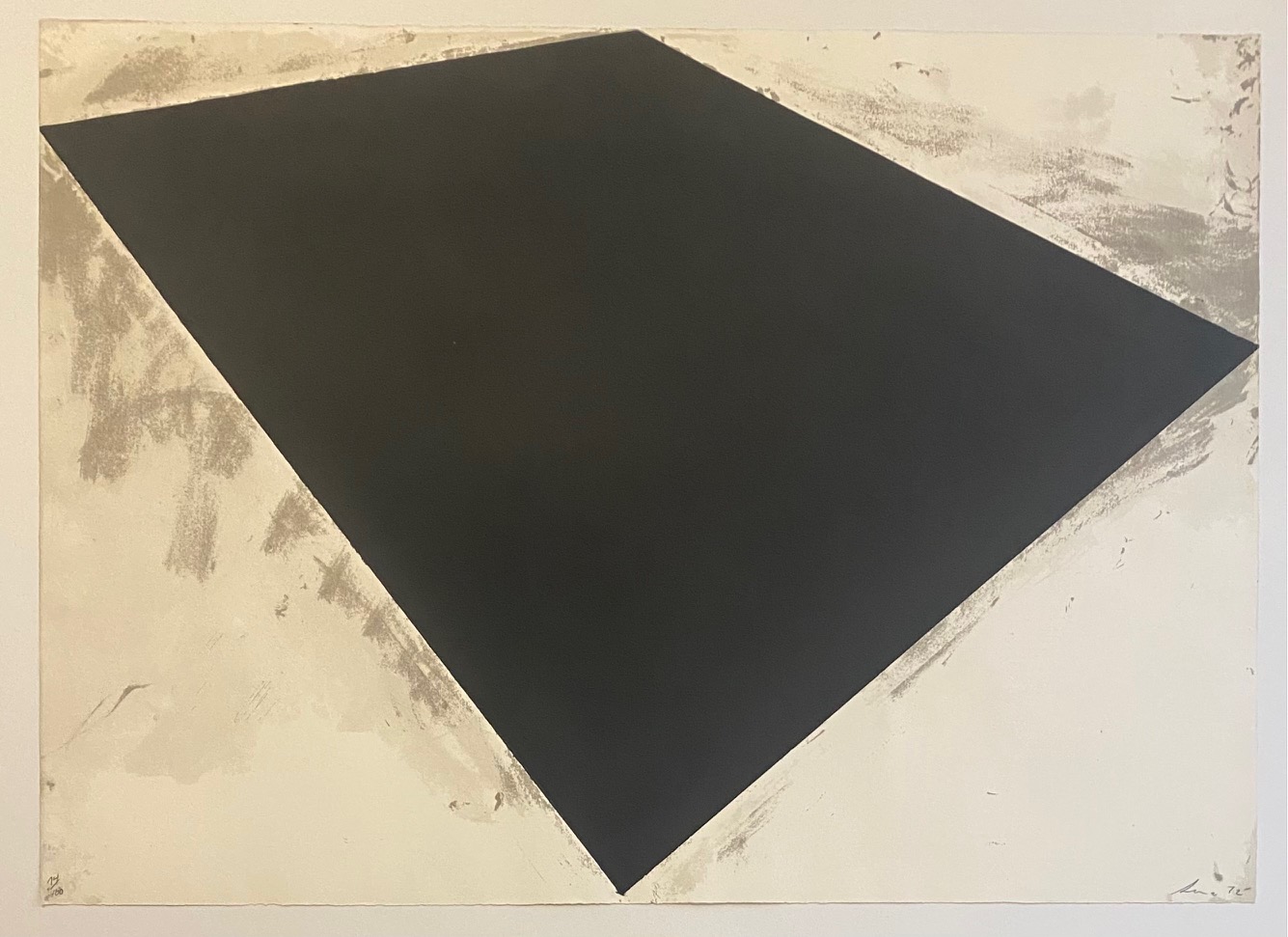
Although best known for his sculptural achievements, Serra maintained an equally rigorous and innovative practice in drawing and printmaking. Beginning in 1972, he explored the expressive possibilities of lithography and screenprinting, developing a graphic vocabulary that reflected the physicality, immediacy, and conceptual discipline of his three-dimensional work. Among these early works is Untitled, for Philip Glass (1972), a screenprint associated with the celebrated American composer and Serra's longtime friend and collaborator. Created during a formative period in New York's experimental art scene, the work reflects the creative exchange between visual art, music, and performance that characterized the era. Serra and Glass shared an interest in repetition, structure, process, and the relationship between time and perception—ideas that profoundly informed their respective artistic practices. Published by the influential Leo Castelli Gallery in New York, the print represents a compelling intersection of two pioneering figures in contemporary art.
Serra's work is represented in the collections of the world's most distinguished institutions, including the Museum of Modern Art, the Metropolitan Museum of Art, the Whitney Museum of American Art, and major international museums. His prints and works on paper hold a particularly important place within his artistic legacy, offering an intimate perspective on the conceptual foundations of his monumental sculptural practice. Early graphic works from the 1970s are especially compelling for their connection to a defining moment in the development of American contemporary art, when artists were fundamentally reconsidering the boundaries between medium, process, and experience. Untitled, for Philip Glass (1972) embodies this spirit of experimentation, offering collectors an opportunity to engage with an early chapter in Serra's remarkable career and the extraordinary creative environment from which his influential body of work emerged.
Richard Serra's enduring influence continues to be celebrated through major museum exhibitions and institutional presentations worldwide. In 2024, the Museum of Modern Art in New York honored the artist with Richard Serra: Drawing Is a Verb (August 20–October 31, 2024), a focused presentation examining the fundamental role of drawing, material, and process in his six-decade career. His monumental sculptures remain central to important museum collections, including Band (2006), on ongoing exhibition at the Los Angeles County Museum of Art (LACMA), and The Matter of Time (2005), the celebrated permanent installation at the Guggenheim Museum Bilbao. The San Francisco Museum of Modern Art also features Serra in its ongoing Ways of Seeing: Fourteen Artists presentation. Together, these exhibitions and installations underscore the extraordinary breadth of Serra's artistic achievement, reaffirming his position as a defining figure of Post-Minimalism and his lasting impact on the evolution of contemporary sculpture, drawing, and printmaking.