
Pablo Picasso


PABLO PICASSO (1881–1973)
Spanish | Modern Master | Original Prints & Works on Paper
Pablo Picasso (1881–1973) stands among the most influential figures in the history of modern art, an artist whose extraordinary vision fundamentally transformed the language of visual expression. Born in Málaga, Spain, and later establishing himself in Paris, Picasso emerged as a defining force of the 20th-century avant-garde. His remarkable career spanned more than seven decades, encompassing an unprecedented range of artistic innovation, from the evocative works of his Blue and Rose Periods to the revolutionary development of Cubism alongside Georges Braque. Constantly challenging conventions of form, perspective, and representation, Picasso created a body of work distinguished by its intellectual depth, technical virtuosity, and enduring cultural significance.
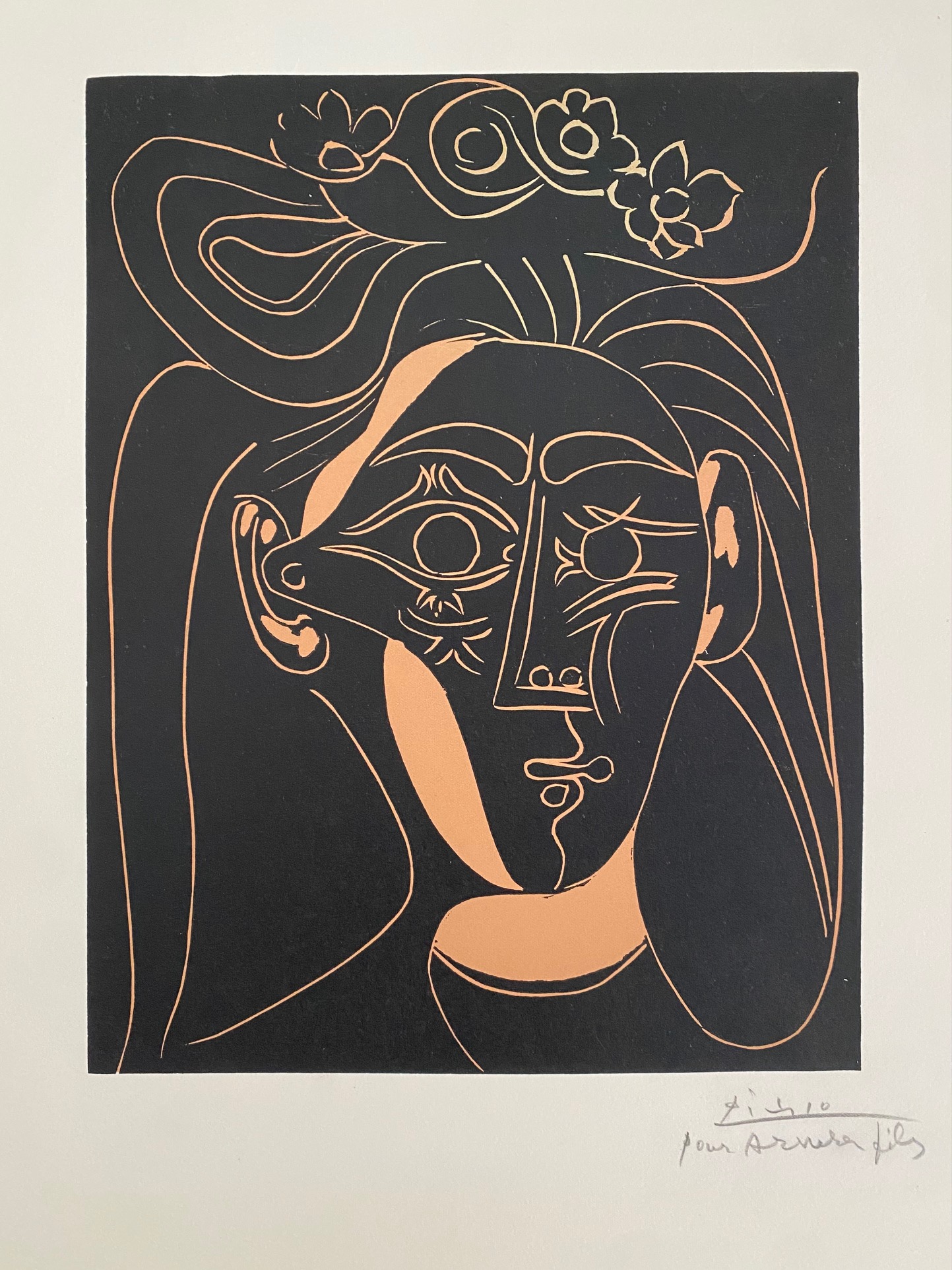
An accomplished and prolific printmaker, Picasso regarded the graphic arts as an essential extension of his creative practice. His extensive oeuvre includes etchings, lithographs, aquatints, and linocuts, each demonstrating his exceptional command of line, composition, and expressive form. Collaborating with renowned master printers, including Fernand Mourlot and Hidalgo Arnéra, Picasso continually expanded the artistic possibilities of printmaking. His celebrated Vollard Suite (1930–1937), comprising 100 etchings, remains a landmark achievement in 20th-century graphic art. Throughout his career, recurring subjects such as the artist and his muse, classical mythology, portraiture, and the human figure provided a rich visual vocabulary through which Picasso explored themes of beauty, desire, identity, and artistic creation. His original prints possess a distinctive intimacy, revealing both the immediacy of his artistic process and the sophistication of his evolving vision.
Today, Picasso's original prints and works on paper occupy a distinguished position within the international fine art market, sought after by discerning private collectors and represented in the permanent collections of the world's leading museums. His graphic works offer a compelling perspective on the breadth of his artistic achievement, from the refinement of his early etchings to the bold experimentation of his later lithographs and richly colored linocuts. Each work reflects a particular moment in Picasso's extraordinary creative evolution, combining historical importance with an unmistakable visual identity. More than a century after his emergence as a pioneering modernist, Picasso's legacy continues to resonate across generations, affirming his place as one of the most significant and enduring artists in the history of art.